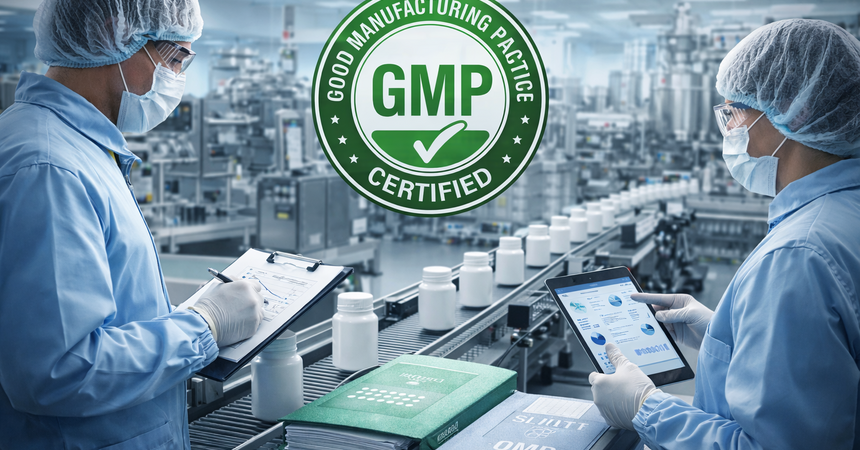
GMP (Good Manufacturing Practice) is a system of standards designed to ensure consistent product quality and safety. GMP certification confirms that manufacturing processes comply with international requirements and are fully controlled at all stages.
What GMP Means
GMP standards regulate:
- manufacturing conditions
- control of raw materials
- production processes
- storage and distribution
- documentation and quality management systems
Industries Where GMP Applies
GMP certification is widely used in:
- pharmaceutical manufacturing
- medical devices production
- biological and veterinary products
- cosmetics manufacturing
- food production (in certain countries and categories)
When GMP Certification Is Mandatory
GMP certification is mandatory in the following cases:
- registration of medicinal products
- export of pharmaceutical products to most countries
- participation in public tenders
- obtaining regulatory approvals and licenses
- cooperation with international distributors and partners
When GMP Is Not Mandatory but Recommended
In some cases, GMP certification is not legally required but provides significant advantages:
- access to international markets
- increased customer and partner trust
- competitive advantage
- simplified audits and inspections
Key Steps of GMP Certification
The GMP certification process typically includes:- assessment of current manufacturing practices
- implementation of GMP requirements
- development and update of documentation
- staff training
- audit and certification
Conclusion
GMP is not just a certificate but a comprehensive quality management system. For many industries, GMP certification is mandatory, while for others it is a critical step toward growth and global recognition.If you need GMP certification or audit preparation, contact WorldWideBridge - we will provide a professional turnkey solution and support you at every stage.