
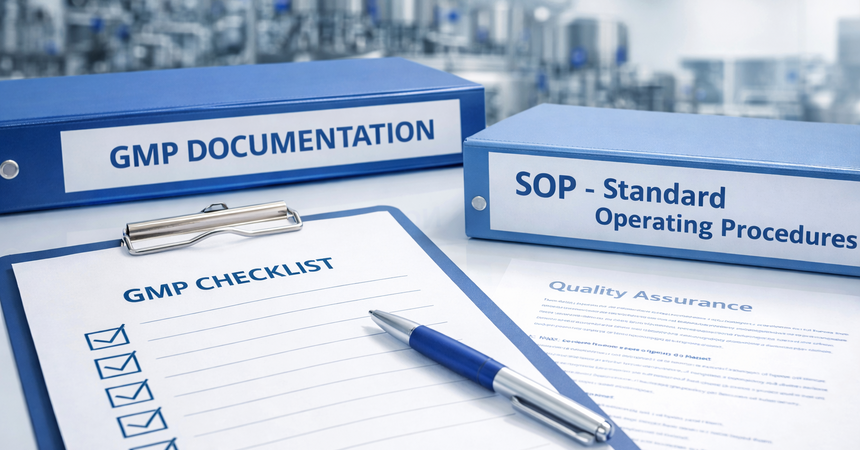
A GMP inspection is a critical step in assessing compliance with Good Manufacturing Practice requirements. Manufacturers should clearly understand how the inspection is conducted and what inspectors focus on during the process.
Preparation stage
Before the inspection begins, the inspecting authority:
- reviews the company application and dossier
- analyzes previous inspection reports and certificates
- prepares the inspection plan and assigns inspectors
Opening meeting
The GMP inspection starts with an opening meeting where:- inspectors and company representatives are introduced
- the scope of inspection is confirmed
- the inspection schedule is discussed
- responsible persons are appointed
Documentation review
Documentation review is a core part of the inspection. Inspectors assess:- quality management system
- SOPs and procedures
- manufacturing and quality control records
- deviations, changes and CAPA
- personnel training records
Facility inspection
Inspectors then examine production areas, including:- warehouses
- manufacturing areas
- packaging and labeling zones
- quality control laboratories
Personnel interviews
Inspectors may interview employees to assess:
- understanding of job responsibilities
- knowledge of SOPs
- actions taken in case of deviations
Closing meeting
At the end of the GMP inspection, a closing meeting is held to:- present identified non-conformities
- provide preliminary conclusions
- discuss timelines for CAPA submission
Post-inspection activities
After the inspection, the company:
- prepares corrective and preventive action plans
- submits responses to the authority
- implements corrective measures
Conclusion
A GMP inspection is a structured and predictable process. Understanding each stage helps manufacturers minimize risks and successfully pass the inspection.If you need GMP inspection support or full preparation services, contact WorldWideBridge - we provide end-to-end GMP inspection support and help manufacturers pass inspections smoothly and confidently.