Israel’s chemical and pharmaceutical market is highly regulated and known for strict safety and quality requirements. Companies wishing to distribute medicines, active ingredients, laboratory chemicals or industrial substances must comply with national standards and complete a formal certification and registration process.
Who regulates the chemical and pharmaceutical sectors in Israel
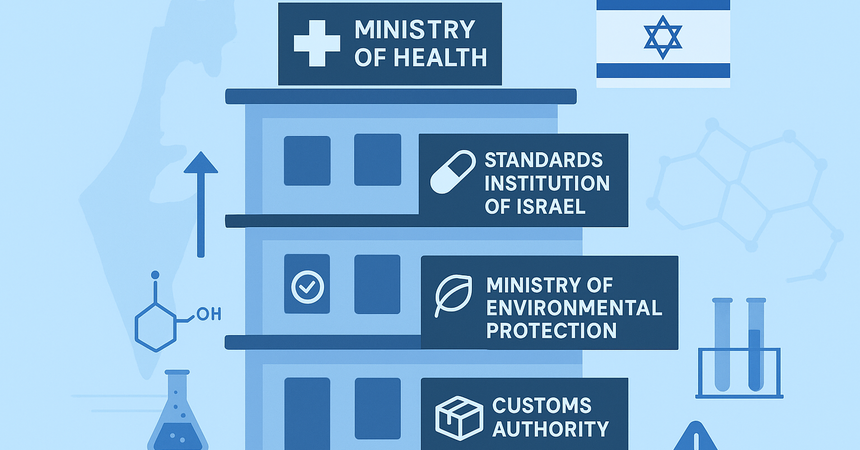
Key authorities include:- Ministry of Health (MoH) – responsible for the registration of medicines, APIs and pharmaceutical products;
- Standards Institution of Israel (SII) – conducts testing, documentation review and issues certificates of conformity;
- Ministry of Environmental Protection – supervises hazardous chemicals, storage, transportation and industrial use;
- customs authorities – verify labeling, packaging and accompanying documentation.
Products that require certification
Mandatory certification applies to substances that may influence safety, health or the environment. These include:- medicines and OTC products;
- APIs and pharmaceutical raw materials;
- industrial chemicals and reagents;
- disinfectants and biocides;
- cosmetic chemicals and dermaceuticals;
- laboratory and clinical chemicals;
- hazardous substances requiring controlled handling.
How the certification and approval process works
The process includes:- Submission of application to the MoH or SII – technical data, test reports, GMP certificates and complete dossiers.
- Identification of relevant standards – experts determine applicable national and international norms.
- Laboratory testing – purity, stability, microbiology, toxicity and other parameters.
- Quality system assessment – confirmation of GMP or ISO compliance.
- Approval and listing – after passing all checks, the product receives authorization for sale or industrial use.
Key risks for manufacturers and importers
Common challenges include:- rejection due to incomplete documentation or missing studies;
- incorrect labeling or lack of Hebrew instructions;
- repeated testing caused by mismatch with required standards;
- environmental regulations for hazardous chemicals;
- absence of an authorized local representative.
How to speed up market entry
Companies can improve timelines by:- preparing full dossiers according to Israeli requirements;
- ensuring compliant labeling and Hebrew instructions;
- using existing FDA or EMA approvals to support registration;
- confirming GMP and relevant quality certificates;
- appointing a local representative for regulatory communication.
Benefits of successful certification
Certification provides:- access to a demanding and high-value market;
- increased trust from distributors and healthcare institutions;
- streamlined import procedures;
- stronger international competitiveness;
- eligibility for government and corporate procurement programs.
WorldWideBridge will help you obtain certification for chemical and pharmaceutical products in Israel on a turnkey basis – from standards analysis and document preparation to laboratory testing and full regulatory support.