A GMP certificate is one of the key documents confirming compliance with international quality standards. Manufacturers need to understand in which countries and regions GMP certification is recognized and how it supports global market access.
What international GMP recognition means
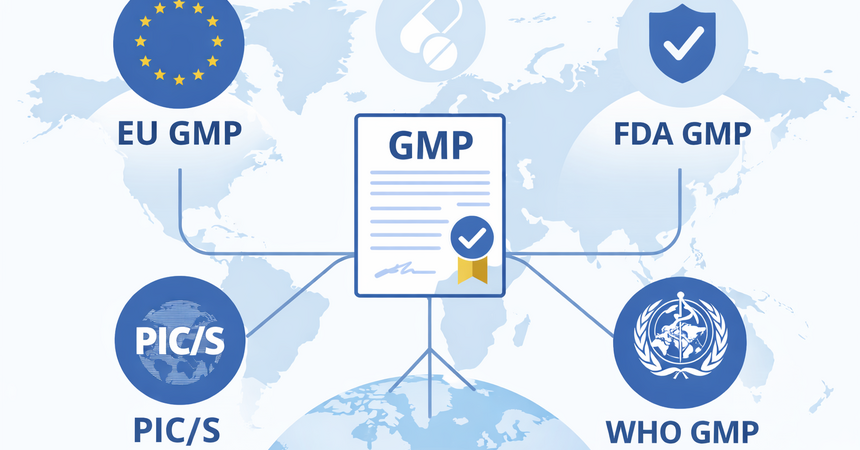
International recognition means that regulatory authorities in different countries accept inspection results and GMP certificates issued by authorized or recognized inspection bodies.
There is no single global GMP certificate - requirements are harmonized, but regulatory systems differ.
European Union
In the European Union, EU GMP is recognized by:- all EU member states
- European Economic Area countries
- countries with mutual recognition agreements
United Kingdom
Following Brexit, the UK applies UK GMP, largely aligned with EU GMP. In many cases, EU GMP certificates are accepted, though additional regulatory steps may apply.United States
In the United States, FDA GMP applies. FDA does not issue formal GMP certificates but confirms compliance through inspections.FDA GMP compliance is widely trusted and recognized internationally.
PIC/S member countries
PIC/S is an international cooperation scheme among GMP regulatory authorities. Member countries include:
- EU countries
- Switzerland
- Canada
- Australia
- Singapore
- multiple countries in Asia and Latin America
Asia, Middle East and Latin America
Many countries in these regions base their GMP requirements on:
- EU GMP
- PIC/S GMP
- WHO GMP
- product registration
- regulatory approval
- market entry
WHO GMP
WHO GMP is widely used in developing countries and is required for participation in international tenders and global supply programs.Key considerations for manufacturers
When planning international supply, manufacturers should consider:
- specific regulatory requirements
- local inspection needs
- inspectorate recognition status
- mutual recognition agreements
Conclusion
GMP certification is widely recognized internationally, but its acceptance depends on regional regulatory frameworks. Understanding these differences enables manufacturers to expand globally with confidence.If you need assistance with GMP certification strategy and international recognition, contact WorldWideBridge - we provide end-to-end GMP support and help manufacturers achieve compliance for target markets worldwide.