
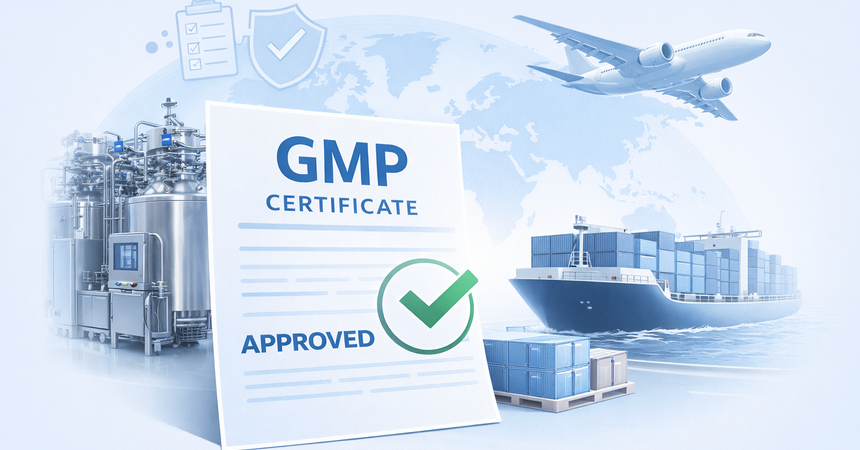
When entering international markets, manufacturers often ask whether GMP certification is required for exporting products. The answer depends on the product type, target country and regulatory requirements, but in most cases GMP is a key condition for successful export.
When GMP certification is mandatory
For pharmaceutical products, GMP compliance is effectively mandatory in most global markets. Regulatory authorities require proof that manufacturing meets international quality and safety standards.GMP is typically required for exporting:
- medicinal products
- active pharmaceutical ingredients
- biological and biotechnology products
- sterile medical products
Dependence on the target market
GMP requirements vary by region:- the EU requires EU GMP
- the USA applies FDA GMP
- many countries in Asia, the Middle East and Latin America rely on PIC/S GMP or WHO GMP
GMP as a competitive advantage
GMP certification provides manufacturers with clear benefits:
- simplified product registration
- fewer inspections
- increased trust from regulators and partners
- broader export opportunities
Is export possible without GMP
Export without GMP is possible only in limited cases, such as:
- non-regulated or non-pharmaceutical products
- countries with minimal regulatory oversight
- special permits for limited volumes
Key considerations for manufacturers
Before exporting, manufacturers should:
- identify target markets
- analyze regulatory requirements
- select the appropriate GMP standard
- assess manufacturing readiness
Conclusion
In most cases, GMP certification is required for product export and serves as a critical tool for international market access. Lack of GMP significantly limits export potential and increases regulatory risks.If you are planning to export products and need clarity on GMP requirements, contact WorldWideBridge - we provide full-cycle GMP consulting and certification support tailored to your target markets.