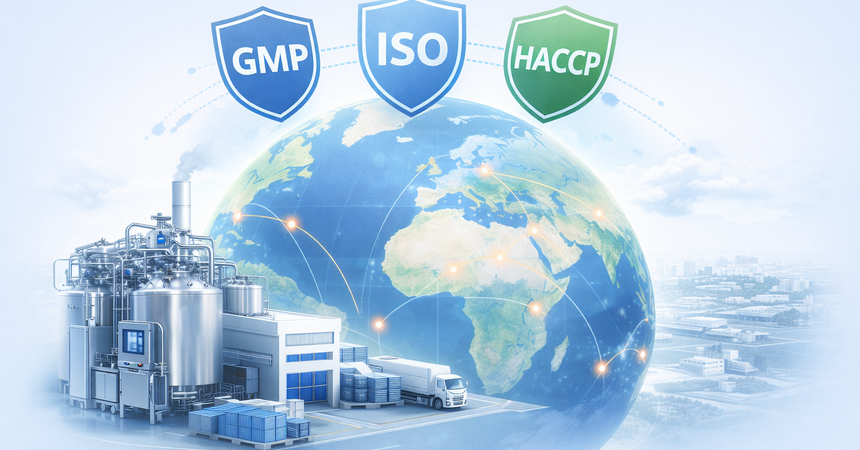
Entering international markets requires compliance with global quality and safety standards. International certification helps manufacturers confirm that their products meet worldwide requirements and facilitates access to new markets.
When International Certification is Necessary
International certification becomes essential if a company plans to export products to countries with strict quality regulations. For example:- GMP – for pharmaceutical and biotechnology products
- ISO 9001 – for various industrial and manufacturing processes
- HACCP – for food and beverage products
Market-Specific Requirements
Certification requirements vary depending on the destination market:- EU – requires compliance with EU GMP and ISO standards
- USA – relies on FDA GMP and ISO standards
- Asia, Latin America, Middle East – PIC/S GMP, WHO GMP, ISO
Certification as a Competitive Advantage
International certification provides significant benefits for companies:- simplifies product registration
- reduces inspections and audits
- increases trust among partners and clients
- expands export opportunities
- improves internal processes and production standardization
Is Export Possible Without Certification
Export without international certification is possible only in limited cases:
- for products with minimal regulatory requirements
- for small volumes or with special permits
- for non-food or non-functional products
Key Considerations Before Certification
Before pursuing certification, manufacturers should:
- identify target markets
- study regulatory requirements
- choose the appropriate standard (GMP, ISO, HACCP, etc.)
- assess production readiness for inspections
Conclusion
International certification is a key tool for entering new markets. It increases regulator and partner trust, facilitates export, and supports company growth.If you plan to export products and want to understand which certificates are necessary for your target markets, contact WorldWideBridge – we provide full preparation and support for certification turnkey.